
Integrating Modelling Competence and Pedagogical Readiness of Pre-Service Mathematics Teachers in Implementing Modelling-Based Classroom Learning
- Authors
-
-
Author
-
Author
-
Author
-
- Keywords:
- curriculum innovation, mathematical modelling, pedagogical readiness, teacher education
- Abstract
-
Mathematical modelling competence has become a key component of 21st-century mathematics education, emphasizing the ability to connect abstract concepts with real-world contexts. However, teacher education programs in Indonesia still demonstrate limited focus on developing modelling pedagogy. This study aims to assess pre-service mathematics teachers’ competencies in mathematical modelling and their pedagogical readiness to implement modelling-based learning in classrooms. The research aligns with the 2025 National Mathematics Curriculum, which positions teachers as facilitators of contextual and future-ready learning. A mixed-method approach was employed, involving mathematics education students from several universities in Indonesia. Data were collected through a diagnostic modelling task and a pedagogical readiness rubric assessing participants’ ability to design, guide, and reflect on modelling lessons. Quantitative analysis revealed that participants showed strong conceptual understanding in formulating and solving mathematical models, yet struggled with validation and didactical reasoning. Qualitative findings supported these results, showing varied pedagogical awareness in scaffolding students’ modelling processes. The findings highlight a gap between mathematical mastery and pedagogical application in modelling instruction. The study concludes that integrating modelling pedagogy into teacher education curricula is essential to empower future teachers and foster curriculum innovation that supports transformative mathematics learning in the digital era.
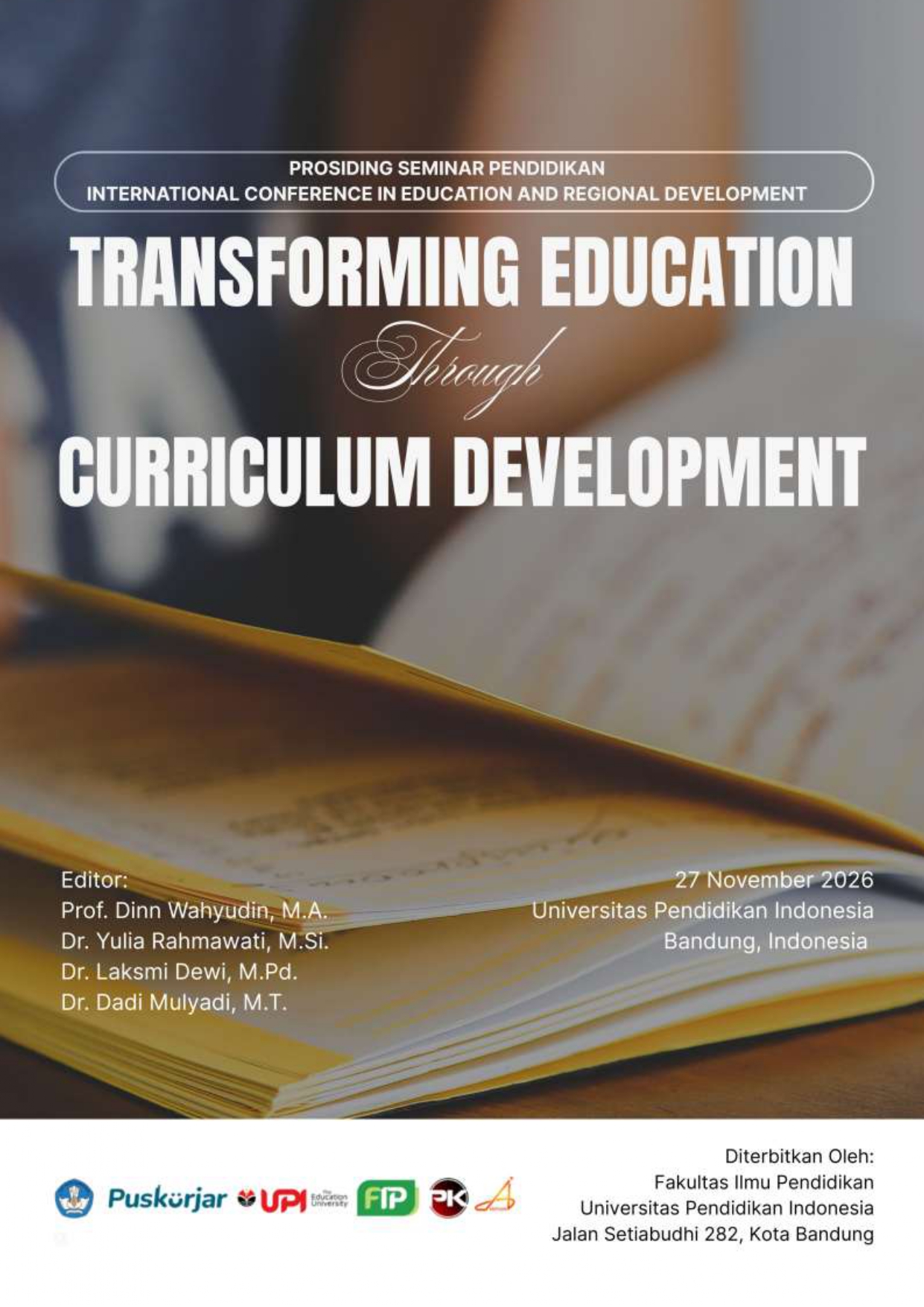
- Cover Image
-
- Downloads
- Published
- 2026-03-30
- Issue
- Vol. 1 No. 1 (2025)
- Section
- Articles